Practicing Upper Cervical Since 2016
Your Head Isn’t On Straight — Literally.
When the top bone in your neck (the atlas) is even slightly misaligned, it can interfere with brainstem function, blood flow, and nerve communication — leading to a surprising range of symptoms most people never associate with their neck.
If you’ve been chasing symptoms but not getting better, the real problem might be in your upper neck.
Common Symptoms We See Improve
People come to us after seeing multiple specialists, trying every therapy, or being told their tests are "normal."
- Chronic headaches or migraines
- Concussions & mTBI
- Brain fog, forgetfulness, or trouble concentrating
- Dizziness, vertigo, or balance problems
- Sensitivity to light or noise
- Neck or shoulder pain
- TMJ or jaw clicking
- Trigeminal neuralgia
- Posture that feels "off"
- Spinal stiffness or tension that keeps coming back
- Ringing in the ears (tinnitus)
- Trouble sleeping or staying asleep
- Fatigue or feeling "wired but tired"
- Feeling unsteady or disconnected from your body
Click on any condition below for more detail
Swipe to explore →
It’s Not in Your Head — It’s in Your Neck.
When your atlas shifts out of alignment, it can:
- Distort nerve signals to and from the brain
- Disrupt cerebrospinal fluid flow, leading to pressure in the head
- Affect blood supply to the brain
- Overstimulate the nervous system, putting your body in a constant state of stress
What Makes Us Different
At Gateway Upper Cervical Institute, we use a highly precise, painless method called Advanced Orthogonal Upper Cervical Care.
- No twisting or popping
- Imaging-guided adjustments to your exact anatomy
- Gentle correction with soundwave-like precision
- Designed to hold longer — so your body can truly heal
The Gateway Approach
- Step 1
Consultation & Exam
We listen. You’ll share your story, and we’ll explore how upper cervical dysfunction might be affecting you.
- Step 2
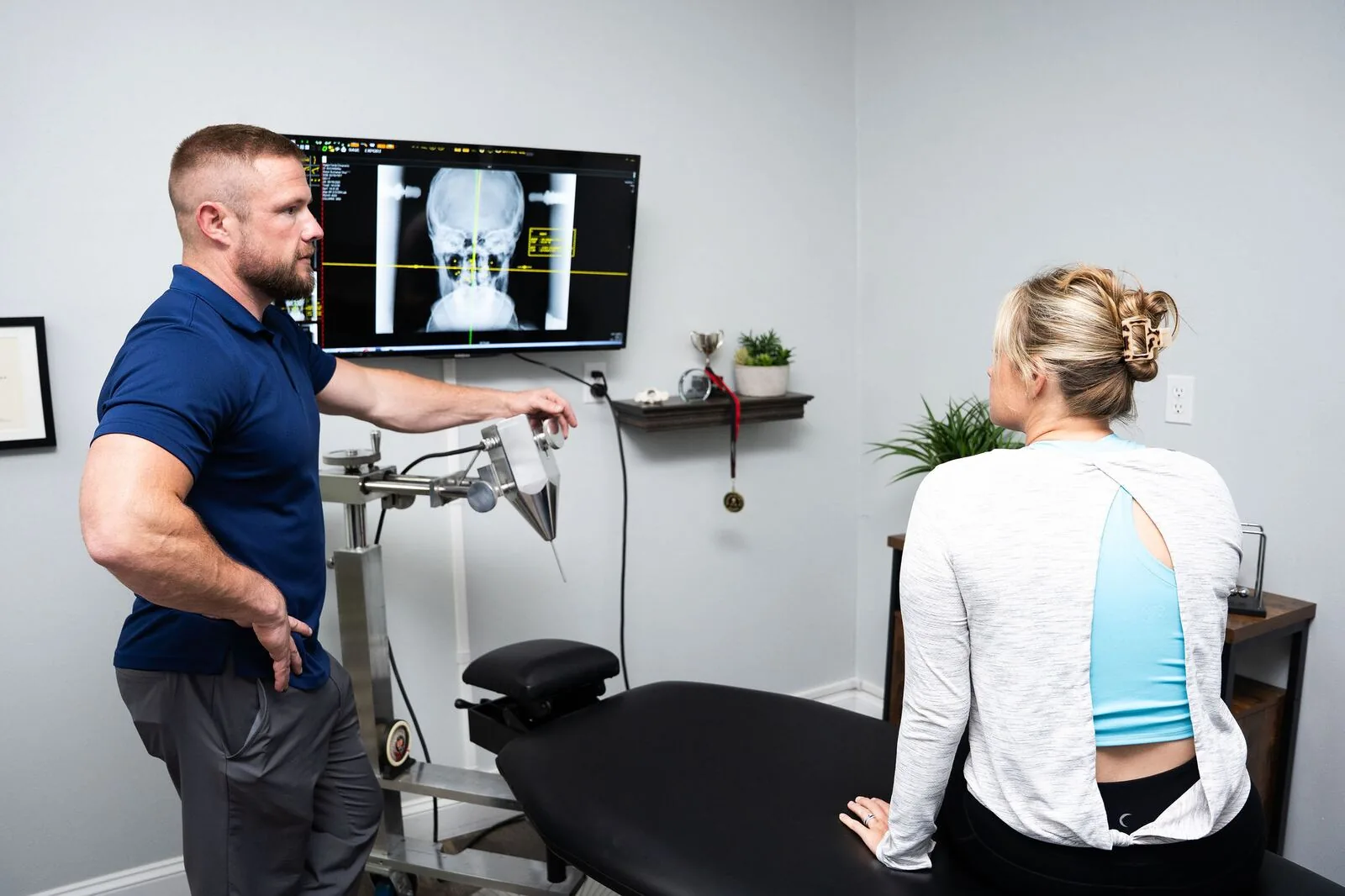
3D Imaging
We use specialized X-rays to detect precise misalignments — down to fractions of a millimeter.
- Step 3
Correction
A gentle instrument-based adjustment is made based on your specific angles and anatomy.
- Step 4
Verification
Post-correction imaging confirms that your atlas is now aligned and the pressure is off.
- Step 5
Restoration
As your body stabilizes, symptoms often begin to fade — and you’ll learn tools to help you stay that way.
Who We Help
Upper cervical care has been life-changing for patients with:
- Post-concussion symptoms
- Migraines and cluster headaches
- Ménière’s disease and tinnitus
- TMJ dysfunction
- Fibromyalgia
- Postural instability and dizziness
- Neurovascular conditions
Even if your diagnosis is unclear — or you’ve been told "everything looks fine" — we may be able to help.
Frequently Asked Questions
What is upper cervical chiropractic care?
Upper cervical chiropractic is a specialized branch of chiropractic care that focuses specifically on the top two vertebrae of the neck — the atlas (C1) and axis (C2) — rather than the whole spine. Because of their position at the base of the skull, a misalignment here can affect brainstem function, cerebrospinal fluid flow, and nerve communication throughout the body, which is why symptoms linked to this area can show up far from the neck itself.
How is upper cervical care different from general chiropractic?
General chiropractic often adjusts multiple areas of the spine using manual, high-velocity thrusts. Upper cervical care — specifically the Advanced Orthogonal technique used at Gateway — focuses only on the atlas, using precision imaging to measure the exact direction and degree of misalignment before making a gentle, low-force, instrument-based correction. There’s no twisting or popping, and the correction is based on your specific anatomy rather than a standardized adjustment.
What conditions can upper cervical care help with?
Patients come to Gateway with a wide range of symptoms, including chronic headaches and migraines, vertigo and dizziness, POTS, concussion and post-concussion symptoms, TMJ dysfunction, trigeminal neuralgia, brain fog, tinnitus, and arm or hand numbness and tingling — particularly when standard testing hasn’t turned up clear answers. See our practice areas page for details on each.
Is upper cervical chiropractic safe?
Advanced Orthogonal correction is a precise, low-force technique guided by imaging rather than a manual, high-velocity thrust, which is part of why it’s used with patients who’ve had a difficult time with other approaches. Published outcomes research on upper cervical care has reported a favorable safety profile across large patient samples — see our patient education library for specific studies and their limitations.
Let’s Find the Cause — Not Just Manage the Symptoms.
You don’t have to live in fear of your next flare-up, or feel like you’re going crazy because your symptoms don’t show up on a test. At Gateway Upper Cervical Institute, we help your body heal by restoring the most overlooked and overprotected part of the nervous system: the upper cervical spine.